.png?width=2000&height=655&name=ORTUS%20TECHNOLOGIES%20LOGO%20with%20icon%20100_%20BLACK(2).png "Ortus Technologies")

Enhancing Pre-Hospital ECMO Treatment
The combination of mechanical chest compression devices and advanced resuscitative techniques like extracorporeal membrane oxygenation (ECMO) represents an innovative approach in the management of patients experiencing refractory cardiac arrest. The corpuls cpr mechanical chest compression device is specifically designed to deliver consistent, high-quality chest compressions, which are critical during cardiac arrest when manual efforts may be difficult to sustain.


This integration of technology not only streamlines resuscitation efforts but also aligns with the growing emphasis on advanced cardiac life support (ACLS) in pre-hospital settings. By ensuring uninterrupted circulatory support and freeing up medical personnel, the corpuls cpr device serves as an essential partner to pre-hospital ECMO, potentially improving survival rates and neurological outcomes for patients in cardiac arrest.
When used in conjunction with pre-hospital ECMO (Extracorporeal Cardiopulmonary Resuscitation or Ecpr), the corpuls cpr device provides several benefits that can significantly improve patient outcomes. Pre-hospital ECMO aims to restore oxygenation and circulation in patients whose conventional resuscitation efforts have failed, but its successful initiation requires sustained, high-quality perfusion during the critical phase before ECMO can be established.
The corpuls cpr device bridges this gap by:
Providing Consistent, High-Quality cpr:
Unlike manual compressions, which are prone to fatigue and variability, the corpuls cpr device ensures optimal depth, rate, and recoil of chest compressions — enhancing coronary and cerebral perfusion until ECMO begins.
Enabling Prolonged Resuscitation:
ECMO cannulation is a complex and time-intensive procedure that often takes place in challenging pre-hospital or transport settings. The corpuls cpr relieves the healthcare team from performing manual compressions, allowing them to focus on ECMO setup and other critical interventions.
Improving Safety and Efficiency During Transport:
The corpuls cpr device is compact and easily integrated into pre-hospital settings, including during ambulance or air transport. By delivering uninterrupted compressions, it minimises interruptions and improves the chances of survival, even in dynamic environments.
Coordination with Pre-Hospital and In-Hospital:
The integration of the corpuls cpr into pre-hospital ECMO treatment not only supports immediate resuscitative efforts but also plays a pivotal role in ensuring smooth transitions during critical phases of patient care, particularly the transfer to the cardiac catheterisation (Cath) lab.
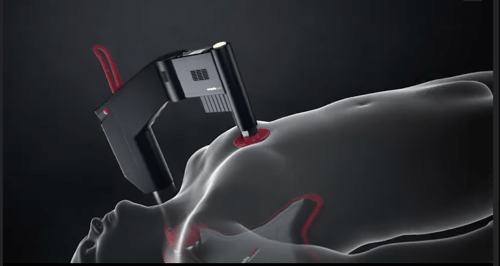
Target the Left Ventricle for Improved Flow
Easily realign the compression stamp location on the chest.
Compressing the left ventricle can significantly enhance blood flow, leading to better patient outcomes. Traditional mechanical compression devices often focus on a single area of the sternum, which may not always achieve optimal results.
The corpuls cpr allows for quick and precise repositioning. Using ultrasound or transoesophageal echocardiography (TEE), you can identify the ideal location to position the compression stamp and effectively target the left ventricle. Simply lift the lever, make a slight adjustment, secure the new position, and restart compressions in a matter of seconds.
London Air Ambulance Charity launches pre-hospital ECMO to bring hope for patients with cardiac arrest
For the first time ever in the UK, London’s Air Ambulance is bringing ECMO to the streets of London, offering hope to patients in cardiac arrest.
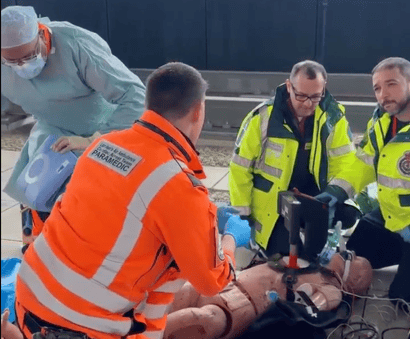

London Air Ambulance service gets new ‘lungs’ with lifesaving equipment
The new ECMO machines have the ability to take over the function of a person's heart and lungs - and are used as a last resort in critical situations
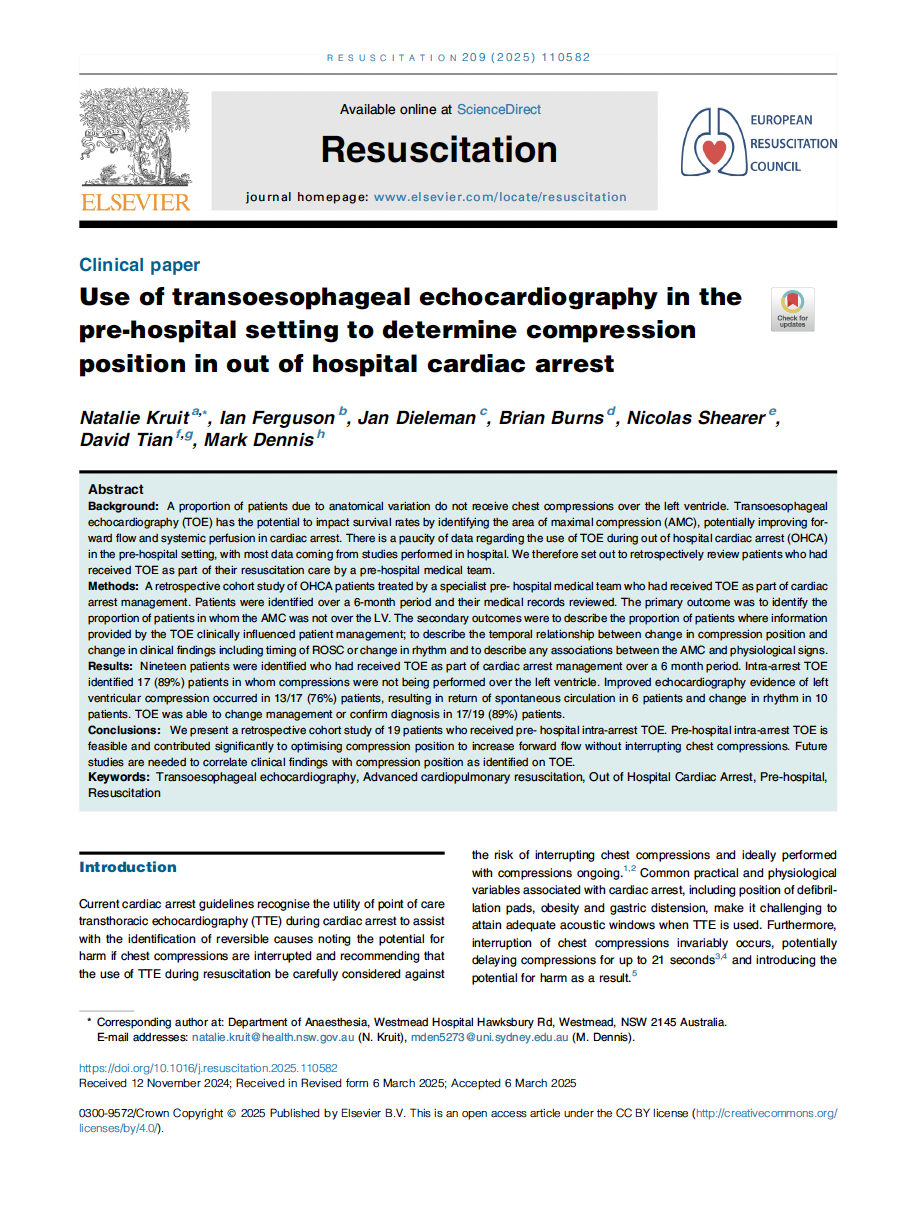
Clinical Paper
Use of transoesophageal echocardiography in the pre-hospital setting to determine compression position in and out of hospital cardiac arrest.
Natalie Kruit, Ian Ferguson, Jan Dieleman, Brian Burns, Nicolas Shearer, David Tian, Mark Dennis
Continue therapy with the corpuls cpr after patient transfer to the Cath Lab
Emergency responders can collaborate more effectively with Cath lab personnel, ensuring a smoother handoff and faster initiation of life-saving PCI or other Cath lab procedures. The uninterrupted compressions provided by the device during this transition also allow the receiving team to focus immediately on their primary tasks rather than having to compensate for gaps in perfusion.
Setting the Benchmark for Future-Proof Mechanical cpr
User-Friendly Operation
Switch from manual cpr to mechanical thorax compressions with minimal interruption.
Therapy start/stop button with alarm function and 4 soft keys
LED Start/Stop button that uses a traffic light system to give the optimum arm positioning instructions.
Simultaneous display of operating mode, compression depth, compression frequency, time/therapy time/remaining battery time in minutes/percent
Compression Parameters
Compression Frequency: 80-120 compressions/min
(individually adjustable in increments of 1 compression/min).
Compression Depth: 2 - 6 cm
(individually adjustable in increments of 0.1 cm).
Three different Therapy Modes: 30:2 / 15:2 / continuous.
Patient Parameters
Thorax Height: 14 - 34 cm.
No restrictions regarding the patient’s weight and breadth of thorax.
Approved for use on children from the age of 8.


Energy Management
Can be operated with a battery as well as via mains connector.
Supplied with two Lithium batteries, each with 90 minute runtime.
The battery can be exchanged quick and easy during therapy. The operation parameters are retained for 30 seconds.
Battery charging time via magnetic plug (no therapy): approx. 105 min: 0–80% then approx. 30 min: 80-100%
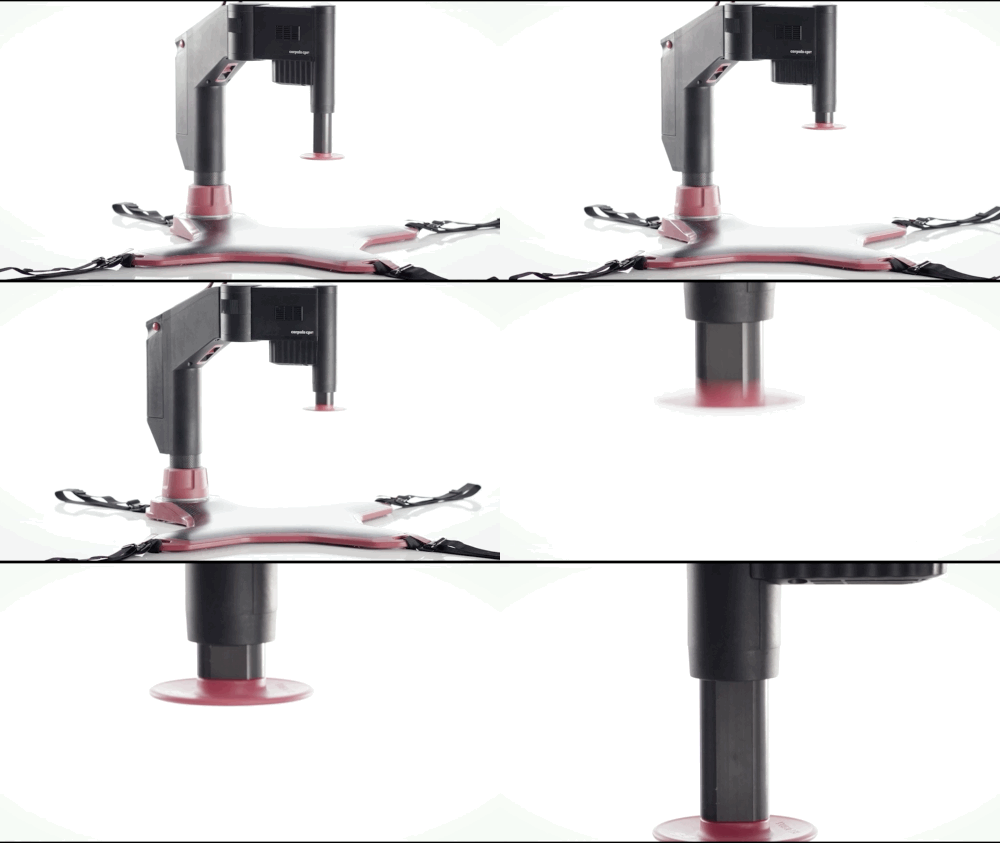
Revolutionary Design
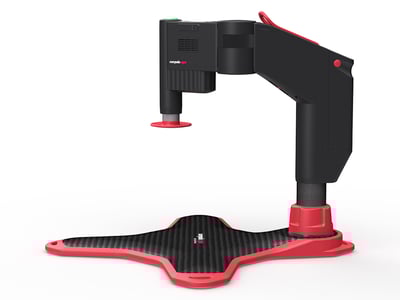
The rotating arm of the corpuls cpr provides unrestricted access to the patient's thorax, ensuring seamless chest compressions during procedures. Mounted to one side, the arm’s swivel function allows precise positioning for uninterrupted compressions.
With two flexible joints and an adjustable height, the corpuls cpr easily adapts to each patient’s unique anatomy, guaranteeing optimal pressure point placement. Compression depth and mode are fully adjustable, allowing a rapid switch from manual to automated chest compressions in just seconds.
An intuitive user interface with a start/stop button, alarm, and four soft-keys simplifies operation. A red flashing alarm alerts the team if the arm is not correctly positioned, ensuring precise, effective compressions every time.
Back Boards
Quad Board
Specifically designed for in-hospital treatment, the boards are made from radiolucent material to ensure full compatibility with radiology equipment, allowing uninterrupted imaging during use.

Rec Board
Engineered specifically for pre-hospital treatment, with attachment straps that secure it to any standard stretcher system for reliable support during transport.
Scoop Board
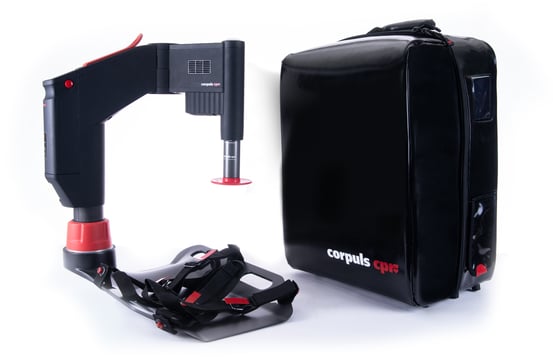
Optimised for use with a scoop stretcher or vacuum mattress, it includes secure straps to attach seamlessly to any standard stretcher system, ensuring stability during transport.
Reusable Compression Stamps
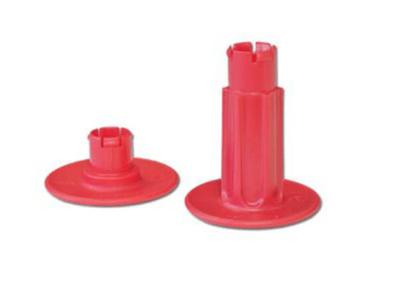
The compression stamps are available in two sizes and are compatible with all standard disinfectants, keeping operating costs low. This ensures that the corpuls cpr is ready for every resuscitation, with no added financial concerns for the operators.
.png?width=225&height=300&name=IMG_9636(1).png "IMG_9636(1)")
Carrying Bag Pack
The corpuls cpr is stored in a high-quality, ergonomic backpack with designated compartments for all essential accessories. Made from easy-to-clean material, it also features an elastic shoulder strap for effortless transport to any emergency location.